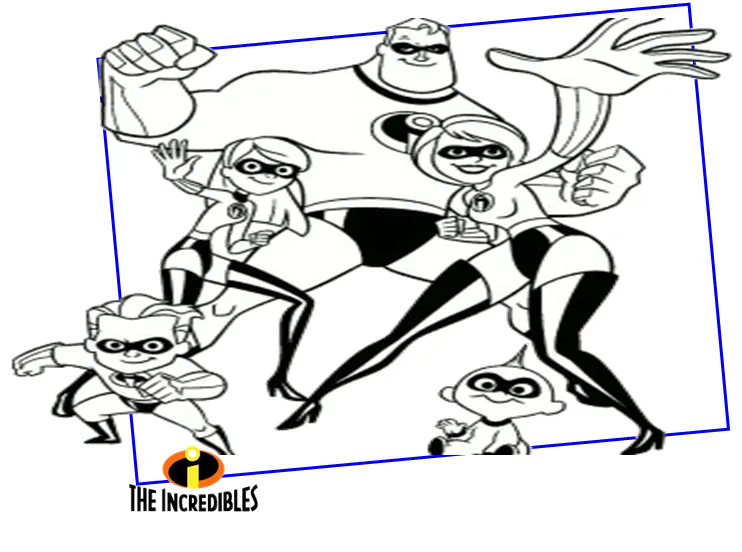
A very special family
Предпросмотр материала:
LESSON PLAN
Topic: A very special family
The VIIth Form
 |
2024
Lesson plan
Mentor_______________________
Subject: English language
Form: 7th A
Date: 29.03.24
Teacher: Slivca Maia
Lesson Topic: Unit 3/ Let’s Test Our Skills
Type of the lesson: Combine
lesson
Time: 45 min
Specific Competence:
CS1 Linguistic competence: Discrimination of linguistic elements by formulating simple, short and correct messages, showing curiosity for the value of language as a system.
CS2 Sociolinguistic competence: The use of linguistic elements, demonstrating creativity for the functioning of language within a social contact.
CS3 Pragmatic
competence: Adaptation of linguistic elements to usual/familiar contexts,
proving correctness and coherence in structuring the message.
Sub Competences:
1.2 Distinguishing by hearing words containing sounds and groups of sounds
specific to the foreign language in simple and familiar contexts issued slowly,
clearly and repeatedly.
1.6 Application of intonation patterns and phenomena specific to the foreign language in simple and familiar communication contexts.
2.5 Application of simple communication models and non-verbal language in social and familiar contexts, to ask for help and demonstrate emotions, states, attitudes.
3.2 Functional use of language resources to produce simple oral and written utterances about personal information and familiar objects.
Objectives: By the end of the lesson students will be
able:
O1 - to read and translate the text .
O2 - to answer the questions and to work with the text.
O3 - to make up sentences using construction “to be going to do something”and
“degrees of comparison of adjective”.
Methods and techniques: Reading, Translating, Discussion, Individual
work.
Materials: Chalk, Blackboard, Worksheets, Pictures, Student’s Book -English
Pupil’s Book- level A1 (I. Ignatiuc, L. Aladin, A. Muntean, L. Foca, D. Puiu).
|
LESSON STAGES |
THEACHER’S ACTIVITY |
PUPIL’S ACTIVITY |
RESOURCE |
STRATEGIES |
TIME |
EVALUATION |
|
EVOCATION
Checking homework |
Good morning children! Sit down. Continue the sentence: My favourite season is…, because… . What was your homework for today? |
Good morning!
- I am fine, thank you. - My favourite season is spring. Because there are a lot of flowers. - Our homework was exercise 4. |
|
whole class work |
2 min
3 min |
Formative evaluation of attention |
|
Motivation for the new lesson |
- How many members are in your family? |
There are 4 members in my family. |
|
whole
class work |
2 min |
Formative evaluation of motivation |
|
REALIZATION OF MEANING Pre-reading |
Describe your family.
|
My family is big. I have 2 sisters and 1 brother. We love to play chess. |
|
whole class work
|
4 min |
Formative evaluation of attention |
|
Reading |
Now we will read and translate the text “A very special family”. Text: Hi, My name is Violet Parr, I’m 14 years old and I live in the centre of New York. Let me introduce you to my family, I will start talking about my youngest brother Jack Jack. He’s 1 years old, main power is to change into different forms. Then, I will continue talking about my younger brother Dash. He is 10 years old but he can run faster than anyone in the family but I’m stronger than him. He also has special powers like me. We can become invisible and we have elastic arms but mum says that we can’t use our powers unless we are in danger. To finish, I will talk about my parents, they are Helen and Bob Parr. My mum is 37 years old and she is the most intelligent in the family my dad is 39 and can lift very heavy things so he is the strongest. We are a very special family.
|
Read and translate the text. Translation: Привет, меня зовут Вайолет Парр, мне 14 лет, я живу в центре Нью-Йорка. Позвольте познакомить вас со своей семьей, я начну рассказывать о своем младшем брате Джеке Джеке. Ему 1 год, главная сила - принимать разные формы. Затем я продолжу рассказ о моем младшем брате Дэше. Ему 10 лет, но он может бегать быстрее всех в семье, но я сильнее его. У него также есть особые способности, как и у меня. Мы можем стать невидимыми и у нас эластичные руки, но мама говорит, что мы не можем использовать свои силы, если нам не угрожает опасность. В заключение я расскажу о своих родителях, это Хелен и Боб Парр. Моей маме 37 лет, и она самая умная в семье, моему отцу 39 лет, и он может поднимать очень тяжелые вещи, поэтому он самый сильный. Мы особенная семья. |
books |
- role reading - chain reading |
10 min |
Evaluate pupil’s speaking
The ability of reading and listening |
|
Past-reading |
Ex.1: Answer the
question. 1. Who is the youngest in the family? 2. How old is Dash? 3. Who is the oldest in the family? 4. Who is the most intelligent? 5. How old is Violet? 6. What is
one of Jack Jack's main powers? Ex 2. Write true (T) or False (F):
1. Jack Jack hasn’t got any special powers 2. .Helen is two years younger than Bob. 3. Jack Jack is four years younger than Violet. 4. Violet is the fastest in the family. 5. The strongest in the family is Bob. 6. Violet's family lives in the center of New York. 7. Helen is the most intelligent in the family. |
1. Jack Jack is the youngest in the family. 2. Dash is 10. 3. Bob Parr is the oldest in the family. 4. Helen Parr is the most intelligent. 5. Violet is 14. 6. The main power is to change into different forms.
1. False 2. True 3. False 4. False 5. True 6. True 7. True |
worksheet |
whole class work
|
8 min |
The ability to understand the text |
|
Activity 5
|
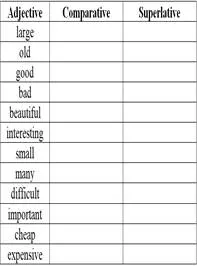
At the previous lesson you learned the construction "to be going to do something". When is this construction used? What will change, when we use it in a sentence? - Degrees of comparison: The comparative degree and the superlative degree are formed by adding the suffixes ER and EST to the positive form of the adjective or by using MORE and MOST before the positive form of the adjective. The choice of ER, EST or MORE, MOST depends mostly on the number of syllables in the adjective. Positive degree: bright; important. Comparative degree: brighter; more important. Superlative degree: brightest; most important.
|
- We use construction in Future Simple. - We change “to be” and verb.
Large-larger –largest Old- older- oldest Good- better – the best Bad – worse – the worst Beautiful – more beautiful – the most beautiful Interesting – more interesting – the most interesting Small – smaller – smallest Many – more- the most Difficult – more difficult – the most difficult Important – more important – the most important Cheap – cheaper – cheapest Expensive – more expensive – the most expensive.
|
books worksheet |
whole class work |
6 min |
The ability to understand the grammar topic |
|
REFLEXION |
4. Write comparative or superlative sentences using the verbs in brackets: 1. My house is (big) ____than yours. 2. This flower is (beautiful) _____than that one. 3. A holiday by the sea is (good) _____than a holiday in the mountains. 4. The weather this summer is even (bad) ____than last summer. 5. I think mathematics is (difficult) ________than English. 6. The lion is (dangerous)___ ____than other animals. 7. He is (good)__ __ student in the class. 8. She is (bad)____ __ dancer in the competition. 9. She is (beautiful)___ ____ woman in the world. 5. Put in the verbs in brackets into the gaps and form possitive sentences. Use be going to. 1. He ____ (phone) his friend. He is going to phone his friend. 2. We ____(play)a new computer game. 3. My sister ____(watch) TV. 4. You ______(have) a picnic next Tuesday. 5. Jane _____(go) to the office. 6. They______(walk) to the bus stop this afternoon. 7. His brother ______(write) a letter to his uncle today. 8. She______(visit) her aunt. 9. I ____(do) my homework after school. 10. Sophie and Nick _____(meet) their friends. 6. Put in the verbs in brackets into the gaps and form negative sentences. Use be going to. 1. They ___(not/eat) oranges. They are not going to eat oranges. 2. I ______(not/wear) blue shoes tonight. 3. We ______(not/help) you. 4. Jack _____(not/walk) home. 5. I_____(not/cook) dinner. 6. Sue _____(not/share) her biscuits. 7. You____(not/leave) the house. 8. I_____(not/spend) my holiday abroad this year. |
1. My house is bigger than yours. 2. This flower is more beautiful than that one. 3. A holiday by the sea is better than a holiday in the mountains. 4. The weather this summer is even worse than last summer. 5. I think mathematics is more difficult than English. 6. The lion is more dangerous than other animals. 7. He is the best student in the class. 8. She is the worst dancer in the competition. 9. She is the most beautiful woman in the world.
1. He is going to phone his friend. 2. We are going to play a new computer game. 3. My sister is going to watch TV. 4. You are going to have a picnic. 5. Jane is going to go to the office. 6. They are going to walk to the bus stop this afternoon. 7. His brother is going to write a letter to his uncle today. 8. She is going to visit her aunt. 9. I am going to do my homework after school. 10. Sophie and Nick are going to meet their friends.
1. They are not going to eat oranges. 2. I am not going to wear blue shoes tonight. 3. We are not going to help you. 4. Jack is not going to walk home. 5. I am not going to cook dinner. 6. Sue is not going to share her biscuits. 7. You are not going to leave the house. 8. I am not going to spend my holiday abroad this year.
|
worksheet |
work individual |
7 min |
|
|
Homework |
7. Put in the verbs in brackets into the gaps and form interogative sentences. Use be going to. 1. basketball on Friday? (she/to play) 2. their bikes at the weekend? (the boys/to ride) 3. the kitchen today? (Paul/to clean) 4. a new T-shirt on Saturday? (his mother/to buy) 5. their friends at the station? (they/to meet) 6. his hamster in the evening? (he/to feed) 7. your homework in the afternoon? (you/to do) 8. on the computer at school? (Robert and Martin/to work) 9. our parents? (we/to help) 10. Freddie in the lunch break? (Lisa/to text) |
1. Is she going to play basketball on Friday? 2. Are the boys going to ride their bikes at the weekend? 3. Is Paul going to clean the kitchen today? 4. Is his mother going to buy a new T-shirt on Saturday? 5. Are they going to meet their friends at the station? 6. Is he going to feed his hamster in the evening? 7. Are you going to do your homework in the afternoon? 8. Are Robert and Martin going to work on the computer at school? 9. Are we going to help our parents? 10. Is Lisa going to text Freddie in the lunch break? |
record book |
|
1 min |
|
|
EXTENSION |
- How did you feel today? Any questions? |
- I am fine, thank you. - No, we don’t.
Goodbye. |
|
|
3 min |
|
A very special family
Что Вы хотите изменить?
Например: обновить оформление, добавить задания, изменить класс, сократить текст или адаптировать материал.
Что Вы хотите изменить?
Например: обновить оформление, добавить задания, изменить класс, сократить текст или адаптировать материал.


Найдите подходящий для Вас курс

В каталоге 7 877 курсов по разным направлениям
Другие материалы
-
«Конструкция There is / There are»
Учебник: «Английский язык, Planet of English, учебник для нач. и средне.проф. образования», Г.Т. Безкоровайная, Н.И. Соколова, Е.А. Койранская
Тема: Unit 2. There Is no Place like Home


Вам будут интересны эти курсы:
- Курс повышения квалификации «Основы построения коммуникаций в организации»
- Курс повышения квалификации «Правовое регулирование рекламной и PR-деятельности»
- Курс профессиональной переподготовки «Информационная поддержка бизнес-процессов в организации»
- Курс профессиональной переподготовки «Маркетинг: теория и методика обучения в образовательной организации»
- Курс профессиональной переподготовки «Организация деятельности по подбору и оценке персонала (рекрутинг)»
- Курс профессиональной переподготовки «Организация деятельности секретаря руководителя со знанием английского языка»
- Курс профессиональной переподготовки «Организация технической поддержки клиентов при установке и эксплуатации информационно-коммуникационных систем»
- Курс профессиональной переподготовки «Осуществление и координация продаж»
- Курс профессиональной переподготовки «Теория и методика музейного дела и охраны исторических памятников»
- Курс профессиональной переподготовки «Теория и методика преподавания иностранных языков в профессиональном образовании: английский, немецкий, французский»
- Курс профессиональной переподготовки «Теория и методика преподавания иностранных языков: английский, немецкий, французский»