"Праздники. На пересечении культур"
Предпросмотр материала:
Открытый урок английского языка
«На пересечении культур. Праздники»
"At the Crossroads of Cultures. Holidays"
Преподаватель: Ермолаева Е.С.
Тип урока: Урок комплексного применения знаний.
Цель урока: Совершенствование лексических и грамматических навыков монологической речи.
Задачи урока:
- Образовательные:
Ø активизировать и расширить словарный запас учащихся по теме: “Праздники и обычаи страны изучаемого языка”;
Ø развивать умения составления монологического единства;
Ø формировать гибкие и вариативные навыки говорения;
Ø научиться систематизировать полученную из разных источников информацию и преобразовывать ее в монолог;
Ø развивать умения составления небольшого монологического высказывания по опорам;
Ø развивать умения понимать иностранную речь на слух.
2. Развивающие:
Ø развивать у учащихся интерес к изучению иностранного языка;
Ø способствовать развитию логических умений и навыков;
Ø развивать языковую догадку, языковую реакцию, память, внимание, мышление, восприятие и инициативу.
3.Воспитательные:
Ø формирование уважительного отношения к языку;
Ø развивать умение активно и плодотворно работать в коллективе;
Ø расширять и углублять культурологические знания, повышать общую культуру общения.
Ø научить детей эстетически правильно представлять материал.
4. Оснащение кабинета:
Ø мультимедийная презентация, доска, раздаточный материал.
5. Предварительная работа:
Ø создание мультимедийной презентации;
Ø письменный ответ учащихся на вопрос «Твой любимый праздник»
Ход урока
I. Организационный момент.
Teacher: Good morning, children! I am glad to see you. I hope you are well today. Sit down, please. Today we will speak with you about the most famous holidays and customs of Great Britain and compare with Russian ones. We also will revise lexical and grammar structures. I hope that it will be interesting for you during our lesson.
1. Целеполагание. Look at the screen and say what is the theme of our lesson.(слайд 1)
2. Фонетическая зарядка. (Слайд №3)
Teacher: Look at the screen. And repeat the following words after me.
To celebrate, religious , fireworks, an occasion, an anniversary, old-fashioned, ancient, gifts, greeting cards, to be connected with.
Упражнения на активизацию лексики по теме:
|
English holiday |
Russian equivalent |
|
New Year's Day |
Новый Год |
|
Christmas |
Рождество |
|
Valentine’s Day |
День Святого Валентина |
|
Easter |
Пасха |
|
Maslenitsa |
Масленица |
|
Peter and Fevronia's day |
День Петра и Февронии |
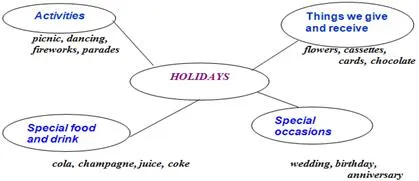
T: What words are associated with the word HOLIDAYS? (Слайд №4 - заполнение WORD WEB).
3. Речевая зарядка (с использованием картинок). (Слайд № 5).
T: Make the sentence longer. People like to celebrate Christmas.
P: People like to celebrate Christmas and New Year. (Easter и т.д.)
4. Agree or disagree with my statements. (Слайд № 6).
T: We celebrate New Year on the 1st of September.
P: That’s wrong. We celebrate New Year on the 1st of January.
T: People celebrate Easter in autumn.
P: That’s wrong. People celebrate Easter in spring.
II. Основная часть:
1. Проверка домашнего задания. Практика говорения. (слайд 7)
Т: Now, we are going to have speaking practice. Your home assignment was to prepare 5-6 sentences about holidays and customs of Russia.
P1 The fist holiday of the year is New Year’s Day. There are a lot of New Year traditions in Russia. In every home there is a New Year tree with lights and decorations. Children always wait for Father Frost to come and give them a present. Many people think New Year’s Day to be a family holiday. But in England not all English people celebrate New Year. A lot of people go to Trafalgar Square to see the Christmas tree. They have a New Year party at home. When Big Ben strikes 12 they drink a toast for the New Year. (Жанарбеков)
P 2 People in Russia have many traditions. One of them is Maslenitsa. On this holiday people say good-bye to winter. People in both countries cook pancakes with honey or sour-cream, they sing songs and dance. (Черешнева)
P3 The 8th of March is a happy and nice holiday. Each family celebrates this spring holiday. In the morning, men go to the shops to buy some flowers. They try to clean flats and to cook a holiday dinner. Sons help their fathers too: they make a cake, lay the table and wash dishes after holiday dinner. There is almost the same holiday in England. It is called Mothers' Day and is celebrated also in spring. Flowers and cakes are the traditional gifts for all women England. All women try to be nice and happy on this day. (Арцибасов)
P4 : In Russia we celebrate Victory day on the 9th of May. On this day, the radio and television broadcast parade held in the Red square. High officials attend this parade. They place a wreath of flowers at the tomb of Unknown Soldier. All stand in silence for a few minutes. In Great Britain people celebrate Remembrance Day on the 11th of November. On this day, the Royal family and political leaders come to the Cenotaph to lay wreaths at its foot. War veterans march past the memorial. An endless line of people wishing to honour the veterans and those were killed in the war follows. (Трухачев)
III этап: Изучение нового материала
1. Работа с текстом о праздниках Великобритании и России. (слайд 8)
Texts for reading:
1. New Year's Eve / Новый Год
England: People gather with family or friends, watch fireworks at midnight, drink champagne, make resolutions for the new year.
Russia: Families have a big dinner, countdown together, watch President's speech on TV, then go outside to see fireworks.
In Russia and the UK, people celebrate New Year’s Eve on December 31st with fireworks, parties, and special meals. In Russia, families gather around a decorated fur tree called “Ёлка” to exchange gifts. In Britain, it is common for friends and family members to toast each other at midnight saying “Happy New Year!” Russians also have another celebration known as Old New Year on January 13th, which comes from the Julian calendar used before 1918.
В России и Великобритании люди празднуют Новый год 31 декабря фейерверками, вечеринками и особыми угощениями. В России семьи собираются вокруг украшенной ели под названием “Елка”, чтобы обменяться подарками. В Великобритании принято, чтобы друзья и члены семьи в полночь произносили тосты друг за друга со словами “С Новым годом!” У россиян также есть другой праздник, известный как Старый Новый год, который отмечается 13 января по юлианскому календарю, использовавшемуся до 1918 года.
2. Christmas / Рождество
England: Decorate homes with lights, trees, presents under tree, carol singing, special meal with turkey.
Russia: Traditional celebration includes church services, fasting before Christmas Eve, eating kutya (a porridge-like dish).
Christmas in both countries involves gift-giving and decorating homes with lights and trees. However, there are differences too. For example, Russian Christians celebrate Christmas on January 7th following their religious traditions while most British people follow Western customs celebrating on December 25th. Santa Claus or Father Frost brings presents under the tree during this festive season.
Рождество в обеих странах предполагает раздачу подарков и украшение домов гирляндами и елками. Однако есть и различия. Например, русские христиане празднуют Рождество 7 января в соответствии со своими религиозными традициями, в то время как большинство британцев придерживаются западных обычаев и празднуют 25 декабря. Санта-Клаус или Дед Мороз приносит подарки под елку в этот праздничный сезон.
3. Maslenitsa / Shrovetide
England: Lenten period starts after Ash Wednesday, no specific celebrations.
Russia: Week-long festival celebrating end of winter, pancakes eaten every day, bonfires lit, folk games played.
Maslenitsa is an ancient Slavic festival celebrated by Russians before Lent begins. It lasts seven days leading up to Ash Wednesday when fasting starts. During these days, pancakes symbolizing sunshine are eaten every day with butter, sour cream, jams etc., marking joyful farewell to winter. There aren't any similar celebrations in Great Britain.
Масленица - древний славянский праздник, отмечаемый русскими перед началом Великого поста. Он длится семь дней, вплоть до Пепельной среды, когда начинается пост. В эти дни каждый день едят блины, символизирующие солнечный свет, с маслом, сметаной, джемом и т.д., отмечая радостное прощание с зимой. В Великобритании нет подобных праздников.
4. Easter / Пасха
England: Colourful eggs given as gifts, chocolate bunnies popular, church services held.
Russia: Bake kulich (traditional bread), decorate eggs beautifully, attend Orthodox Church service.
Easter marks Jesus Christ's resurrection after his crucifixion according to Christian belief. Both nations commemorate this event but differently. While Britons enjoy chocolate eggs hidden by bunny rabbits, Russians bake Kulich bread loaves and color hardboiled eggs red signifying blood shed by Jesus for humanity.
Согласно христианской вере, Пасха знаменует воскресение Иисуса Христа после его распятия. Оба народа отмечают это событие, но по-разному. В то время как британцы наслаждаются шоколадными яйцами, спрятанными кроликами, русские пекут куличи и окрашивают сваренные вкрутую яйца в красный цвет, символизирующий кровь, пролитую Иисусом за человечество.
5. Valentine’s Day / День Святого Валентина
England: Cards sent anonymously, flowers, chocolates gifted, romantic dinners arranged.
Russia: Similar practices but also postcards called “valentinki” exchanged among children and young adults.
St Valentine's Day (День Святого Валентина)
St Valentine's Day is celebrated on February 14th honoring love between couples worldwide including Russia and England alike. Cards expressing affection towards loved ones are exchanged along with flowers such as roses. Some restaurants offer romantic dinners specifically designed for lovers’ night out.
День Святого Валентина отмечается 14 февраля в честь любви между парами по всему миру, включая Россию и Англию. Открытки, выражающие любовь к любимым, обмениваются цветами, например розами. Некоторые рестораны предлагают романтические ужины, специально предназначенные для вечера влюбленных.
6. Peter and Fevronia's Day / День Петра и Февронии
England: No such holiday exists.
Russia: Celebrated on July 8th, dedicated to love and family values, gift-giving similar to Western Valentine’s Day.
Peter & Fevronia Day (День Петра и Февронии)
Peter & Fevronia Day is the day of family, love and respect within marriages observed primarily. It is celebrated on 8th July. Among Eastern European cultures particularly those influenced heavily by Russian tradition like Belarusians, Ukrainians besides native Russians themselves. Couples often visit churches together, asking blessings, long lasting relationships.
День Петра и Февронии - это день семьи, любви и уважения в браке, который отмечается в первую очередь. Он отмечается 14 июля. В восточноевропейских культурах, особенно в тех, которые находятся под сильным влиянием русских традиций, таких как белорусы, украинцы, а также сами коренные русские. Пары часто вместе посещают церкви, прося благословения на длительные отношения.
IV этап: Закрепление изученного материала
Quiz time: Multiple-choice quiz testing students’ understanding of differences between UK and Russian customs. (слайд 9)
|
1. What’s your favourite holiday? |
My favourite holiday is … |
|
2. Why do Russians make pancakes? |
To say goodbye to winter and welcome spring |
|
3 Who delivers gifts in Russia during Christmas time? |
Father Frost |
|
4 When do Britons typically eat chocolate eggs? |
On Easter Sunday |
|
5 When is Christmas in Russia? |
It’s on the 7th of January. |
|
6 How do people celebrate it? |
They cook tasty food, go the church. |
|
7 When is Christmas in Great Britain? |
It’s on the 25th of December. |
|
8 When is St Patrick’s Day in Ireland? |
It’s on the 17th of March. |
|
9 When is Valentine’s Day? |
It’s on the 14th of February. |
|
10 How do people celebrate it? |
They write postcards, give presents to them, whom they like. |
|
11 What is typical food for Russian New Year’s Eve? |
It is Oliivie salad. |
|
12 Do you like Maslenitsa? |
Yes, I do. |
|
13 How do you celebrate it? |
We make a lot of pancakes and eat them. They are very yummy. |
Филворд (слайд 10)
|
g |
r |
e |
e |
t |
i |
n |
g |
c |
a |
r |
d |
|
|
|
|
|
c |
e |
l |
e |
b |
r |
a |
t |
e |
|
|
|
|
|
p |
f |
|
|
|
|
e |
|
|
g |
i |
f |
t |
|
|
e |
l |
|
|
|
b |
L |
i |
n |
i |
|
|
|
|
f |
t |
o |
c |
c |
a |
s |
i |
o |
n |
|
|
e |
|
|
e |
e |
w |
|
|
|
|
g |
|
|
|
|
a |
|
|
v |
r |
e |
|
m |
a |
s |
I |
e |
n |
i |
t |
s |
a |
|
r |
|
r |
|
|
|
|
o |
|
|
|
s |
t |
n |
|
o |
|
e |
g |
g |
|
|
u |
|
|
|
p |
e |
c |
|
n |
|
|
|
|
|
|
s |
|
|
|
r |
r |
i |
|
i |
|
c |
h |
r |
i |
s |
t |
m |
a |
s |
i |
|
e |
|
a |
|
|
|
n |
e |
w |
y |
e |
a |
r |
n |
|
n |
|
|
v |
a |
l |
e |
n |
t |
i |
n |
e |
|
g |
|
t |
|
|
|
|
|
|
f |
i |
r |
e |
w |
o |
r |
k |
s |
celebrate, religious , fireworks, occasion, ancient, gift, greeting card, New Year, Christmas, Valentine, Easter, Maslenitsa, Peter, Fevronia, flower, spring, egg, blini
V. Релаксация. (слайд №11).
T: Sit comfortably. Close your eyes. Breathe in. Breathe out. Let’s pretend it`s summer. You are lying on a sandy beach. The sun is shining. The sky is blue. The weather is fine. The light wind is blowing from the sea. The birds are singing. You have no troubles. No serious problems. You are quiеt. Your brain relaxes. There is calm in your body. You are relaxing. Your troubles flew away. You love your relatives and friends. They love you too. You are sure of yourself, that you have much energy. You are in good spirits. Open your eyes.
VI. Повторение грамматики (Past Progressive ). Слайд №12.

Past Continuous — это прошедшее длительное время, которое указывает на событие или процесс, длившийся в определенный период времени в прошлом.
Причем, этот момент в прошлом обязательно должен быть указан. Это может быть как какое-то конкретное время (at 5 o’clock), так и указание на момент времени (when) или на крайний случай — подразумеваться из контекста.
I was dancing all night long— Я танцевал всю ночь (речь идет о ночи, которая уже прошла)
Время Past Continuous часто можно услышать в повседневной речи носителей языка. С его помощью можно рассказать о длительных действиях в прошлом.
Утверждение
Утвердительные предложения составляются по формуле при помощи вспомогательных глаголов was / were (в зависимости от числа) и первой формы глагола.
I / He / She / It / You / We / They + was / were + Ving
I was cooking the dinner — Я готовил обед
They were watching the Star Wars — Они смотрели «Звездные войны»
Отрицание
Отрицательные предложения Past Continuous образуются при помощи добавления частицы not после вспомогательного глагола was / were но перед смысловым глаголом.
I / He / She / It / You / We / They + was/were + not + Ving
I was not drinking coffee — Я не пил кофе
They were not watching Harry Potter — Они не смотрели Гарри Поттера
was not = wasn’t
were not = weren’t
Вопрос
Вопросительные предложения в Past Continuous образуются путем переноса вспомогательного глагола was / were в начало предложения.
Was / were + I / He / She / It / You / We / They + Ving
Was I drinking tea? — Я пил чай?
Were we driving the main road? — Мы ехали по главной дороге?
Специальные уточняющие вопросы образуются во времени Past Continuous при помощи постановки в начало предложения question words (QW - вопросительных слов). Таких, как where (где), when (когда) и других. Дальнейший порядок слов в конструкции повторяет вышеупомянутую вопросительную форму.
QW + was / were + I / He / She / It / You / We / They + Ving
What were you singing at the karaoke bar this time last Friday? — Что ты пела в караоке-баре в это время в прошлую пятницу?
Where were you staying when you went to Paris? — Где ты останавливался, когда ездил в Париж?
Отработка грамматического материала
Упражнение 1: Поставьте глаголы в форму Past Continuous. Сделай предложения вопросительными и отрицательными (слайд 13)
1. I (to read) ________ a book at 8 p.m. yesterday.
2. They (to dance) ________ when the lights went out.
3. She (to cook) ________ dinner while her husband (to watch) ________ TV.
4. We (to play) ________ football when it started raining.
5. The dog (to bark) ________ loudly all night.
6. He (to drive) ________ too fast, so the police stopped him.
7. The kids (to laugh) ________ at the funny movie.
8. You (to sleep) ________ when I called.
9. The birds (to sing) ________ in the garden.
10. I (to study) ________ for the exam all evening.
Упражнение 2: Переставьте слова в правильном порядке (слайд 14)
1. washing / was / dishes / She / the / . → ________
2. while / I / sleeping / was / called / You / . → ________
3. the / raining / was / It / all day / . → ________
4. at / laughing / They / joke / the / were / . → ________
5. cooking / dinner / Mom / was / 6 p.m. / at / . → ________
6. the / studying / Students / library / were / in / the / . → ________
7. when / arrived / We / were / waiting / you / . → ________
8. TV / watching / He / wasn’t / . → ________
9. Why / crying / you / were / ? → ________
10. the / singing / birds / morning / were / this / . → ________
Упражнение 3: Исправьте ошибки в предложениях (слайд 15)
1. She were singing when I entered the room. → ________
2. What was they doing at midnight? → ________
3. The children wasn’t playing outside. → ________
4. While he cooked, the phone rang. → ________
5. We was discussing the plan. → ________
VII. Заключительный этап.
1. Рефлексия приобретенных знаний и умений. (слайд 16)
T: Well done. Thank you for your excellent work. You know a lot about customs and holidays of Great Britain and Russia. If you like our lesson, show me a funny smile and if you do not like, show me a sad smile.
2. Домашнее задание. Подведение итогов урока.
T: Now write down your homework. Next lesson we will speak about American holidays. So you are to prepare a report about one of them and be ready for the test.
T: You worked well today. Your marks for the lesson are… Thank you. The lesson is over. Good bye.
"Праздники. На пересечении культур"
Что Вы хотите изменить?
Например: обновить оформление, добавить задания, изменить класс, сократить текст или адаптировать материал.
Что Вы хотите изменить?
Например: обновить оформление, добавить задания, изменить класс, сократить текст или адаптировать материал.


Найдите подходящий для Вас курс

В каталоге 7 827 курсов по разным направлениям
Другие материалы
-
"Методическая разработка урока английского языка "
Учебник: «Английский язык (в 2 частях)», Баранова К.М.,Дули Д., Копылова В.В. и др.
Тема: Module 2. My Birthday


Вам будут интересны эти курсы:
- Курс повышения квалификации «История и философия науки в условиях реализации ФГОС ВО»
- Курс повышения квалификации «Основы построения коммуникаций в организации»
- Курс повышения квалификации «Основы управления проектами в условиях реализации ФГОС»
- Курс повышения квалификации «Правовое регулирование рекламной и PR-деятельности»
- Курс повышения квалификации «Страхование и актуарные расчеты»
- Курс повышения квалификации «Финансы: управление структурой капитала»
- Курс профессиональной переподготовки «Организация деятельности секретаря руководителя со знанием английского языка»
- Курс профессиональной переподготовки «Организация деятельности специалиста оценщика-эксперта по оценке имущества»
- Курс профессиональной переподготовки «Организация и предоставление туристских услуг»
- Курс профессиональной переподготовки «Теория и методика преподавания иностранных языков в профессиональном образовании: английский, немецкий, французский»
- Курс профессиональной переподготовки «Теория и методика преподавания иностранных языков: английский, немецкий, французский»